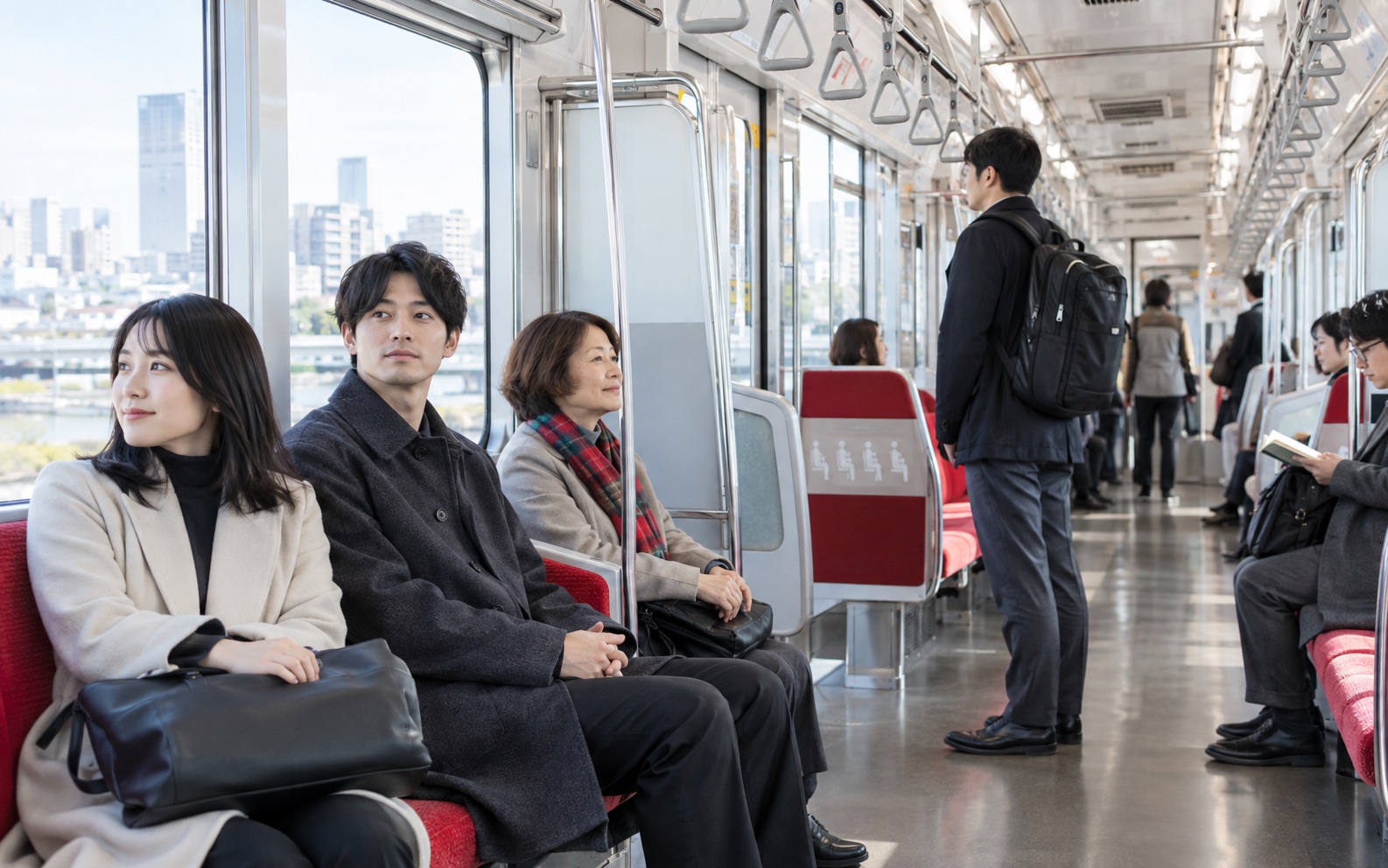
You do not need to memorize a long list of customs to ride Tokyo trains politely. Give people space, follow the queue, keep noise low, and pay attention to signs. These simple habits cover almost every situation.
1. On the platform
- 1Form an orderly line
Stand behind the floor markings for your door and join the end of the queue.
- 2Stay behind the safety line
Do not lean over platform gates or step close to the edge for a photo.
- 3Do not run for the train
Another service is usually coming soon, and rushing creates a safety risk.
2. Boarding and standing near the doors
Move to the side and let passengers get off before you board. Once inside, move away from the doorway when space is available. If you are standing at the door when the train reaches a busy station, step onto the platform briefly to let people leave, then reboard.
Do not hold the doors or try to squeeze into a closing train. Bags and umbrellas can become trapped.
3. Inside the train
- Use headphones at a volume other passengers cannot hear.
- Keep conversations quiet, especially on commuter trains.
- Avoid watching your phone while walking through the station.
- Do not block doors, aisles, stairs, or the space directly in front of gates.
- Keep wet umbrellas close to you and away from other passengers.
4. Priority seats and women-only cars
Priority seats are intended for older passengers, people with disabilities, pregnant passengers, and adults traveling with infants. You may sit when the train is quiet, but stay alert and offer the seat when someone needs it.
Some lines operate women-only cars during specified morning hours. The applicable times and boarding positions are shown on platform signs and vary by line. Follow the posted information rather than assuming the rule applies all day.
Passengers carrying a red-and-white Help Mark may need a seat or extra consideration even if they appear healthy.
5. Luggage and rush hour
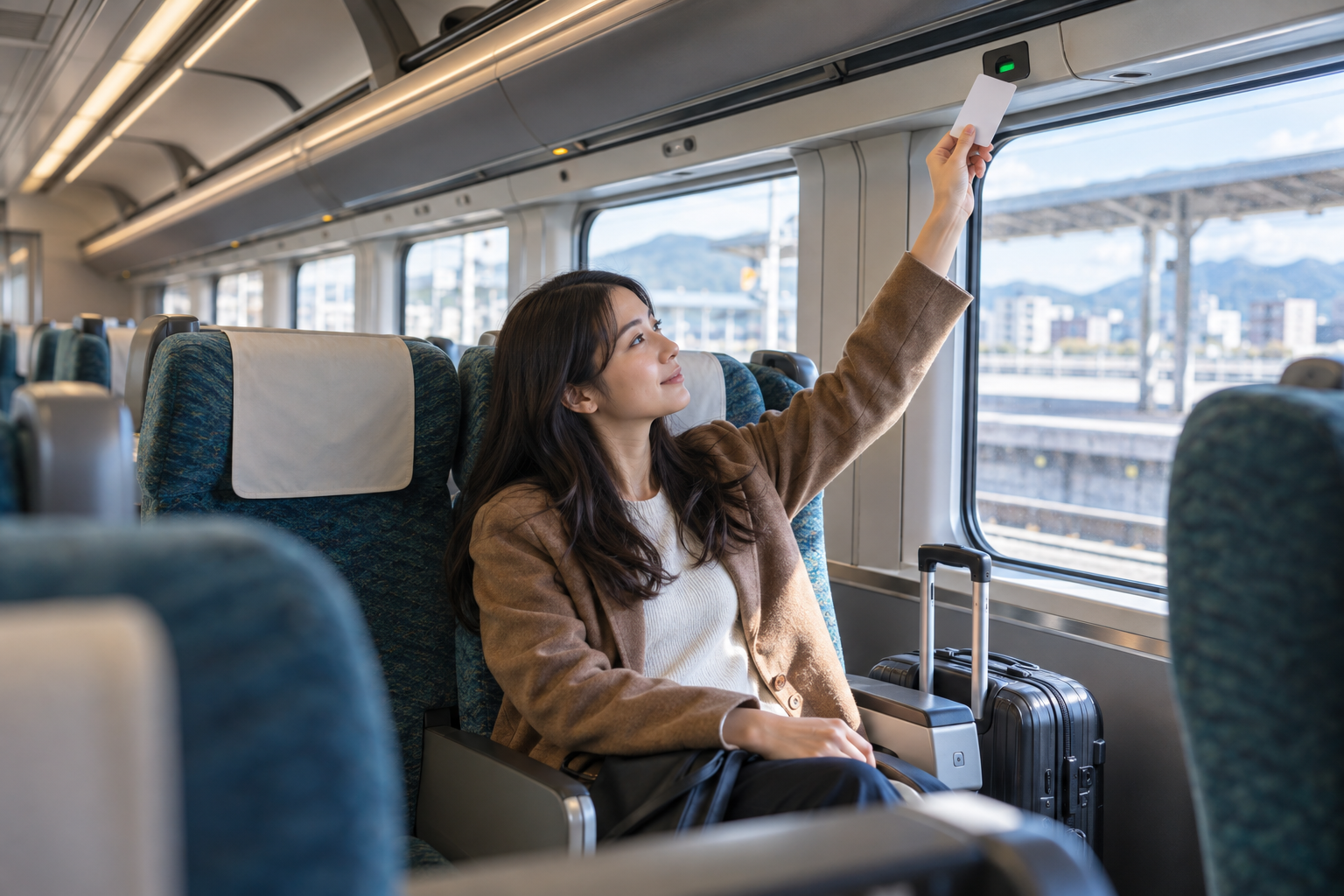
Wear a backpack on your front or hold it low when the train is crowded. Put smaller bags on the overhead rack or on your lap. Keep wheeled luggage from rolling and never block a doorway.
If possible, avoid weekday rush hour with large suitcases. Tokyo trains are designed for enormous commuter volumes, but the busiest services leave little room for baggage.
6. Food, drinks, and phone calls
Eating a full meal is generally avoided on ordinary commuter trains. A small drink is fine if you handle it carefully. Eating a station bento is normal on the Shinkansen and many long-distance limited-express trains.
Set your phone to silent mode and avoid voice calls in the passenger cabin. On long-distance trains, make calls in the deck or designated area when permitted.
If you are unsure, copy the calm behavior around you. Japanese train etiquette is mostly about keeping the shared space comfortable.
7. Quick FAQ
Can I talk with my travel partner?
Yes. Keep your voice low and avoid loud group conversations, particularly on crowded commuter trains.
Should I give up any seat to an older passenger?
It is considerate when someone appears to need it. Priority-seat signs identify the passengers who should receive special consideration.
Which side should I stand on an escalator?
Local habits differ, and railways increasingly ask passengers to stand rather than walk. Follow signs, keep one hand available, and do not force past people.
Guidance was checked against Tokyo Metro’s official pages on things to consider when riding and subway manners. Follow current station and onboard signs.