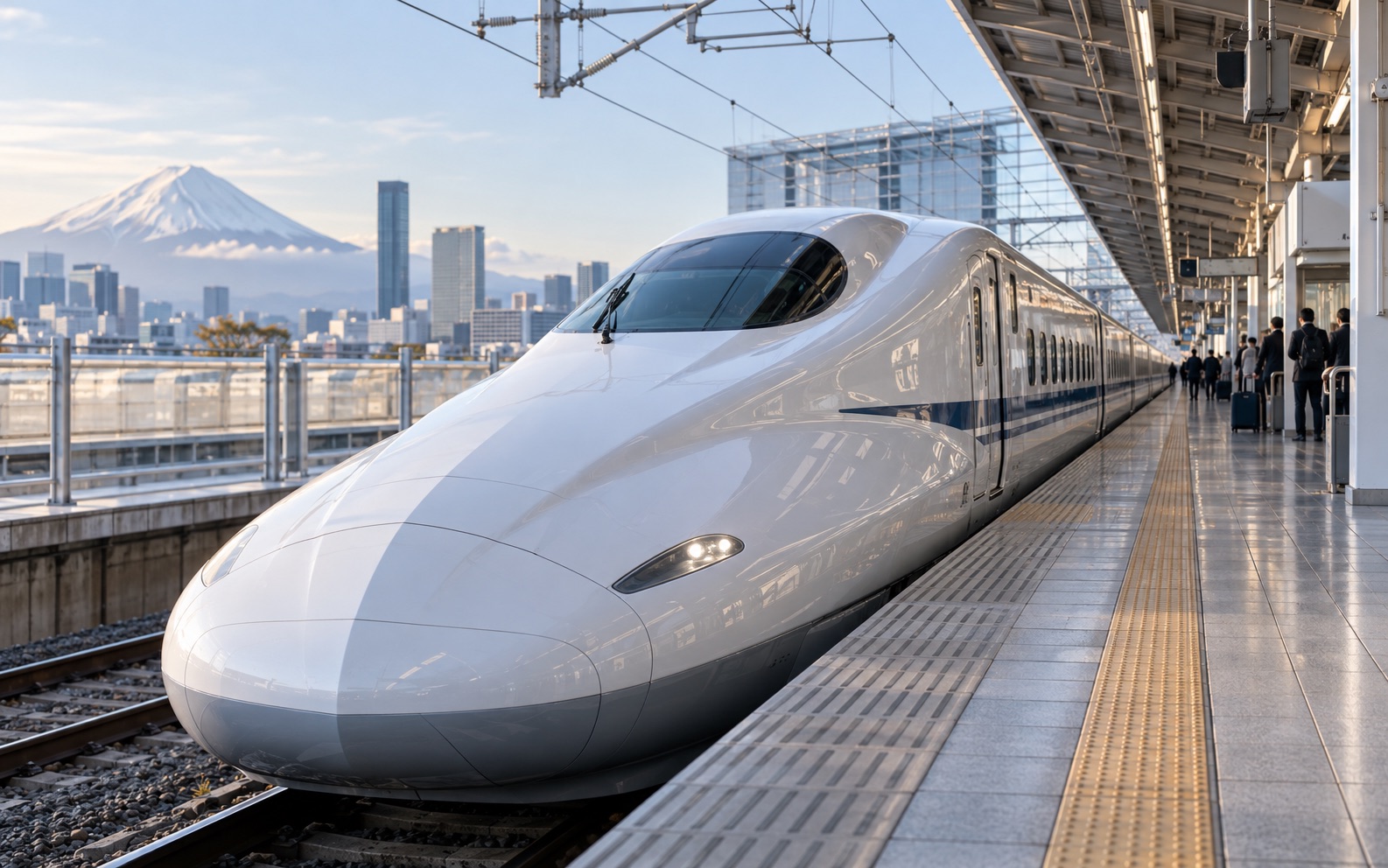
The Shinkansen is easy once you understand the ticket. For most journeys you need a basic fare plus a Shinkansen limited-express fare. These may be printed on two paper tickets, combined into one ticket, or linked to a digital reservation.
1. Understand the ticket
A Shinkansen journey normally contains two fare components. The basic fare covers travel between cities, while the limited-express fare covers the high-speed service and your seat type. A vending machine or booking website calculates both, so you do not need to add them yourself.
When comparing prices, check whether the result includes a reserved seat and whether the train is covered by your rail pass.
2. Where to buy Shinkansen tickets
- Official online reservation: Smart EX covers the Tokaido, Sanyo, and Kyushu Shinkansen; other JR regions have their own official services.
- Reserved-seat ticket machine: major JR stations provide multilingual menus.
- JR ticket office: useful for complicated itineraries, rail passes, or questions about luggage.
Tickets generally go on sale one month before departure. During New Year, Golden Week, Obon, and popular weekends, reserve early.
For Tokyo to Kyoto or Osaka, sit on the right side when traveling west for a chance to see Mount Fuji in clear weather; traveling east, choose the left.
3. Reserved or non-reserved?
| Choice | Best for | What to know |
|---|---|---|
| Reserved seat | Families, luggage, busy dates | Your train, car, and seat are fixed. |
| Non-reserved seat | Flexible travel on eligible trains | Seats are first come, first served; some trains have none. |
| Green Car | More space and quieter travel | Costs more and normally requires a reservation. |
4. How to board, step by step
- 1Find the Shinkansen gate
It is separate from the ordinary JR gate. Follow the bullet-train icon and your line name.
- 2Use the correct ticket method
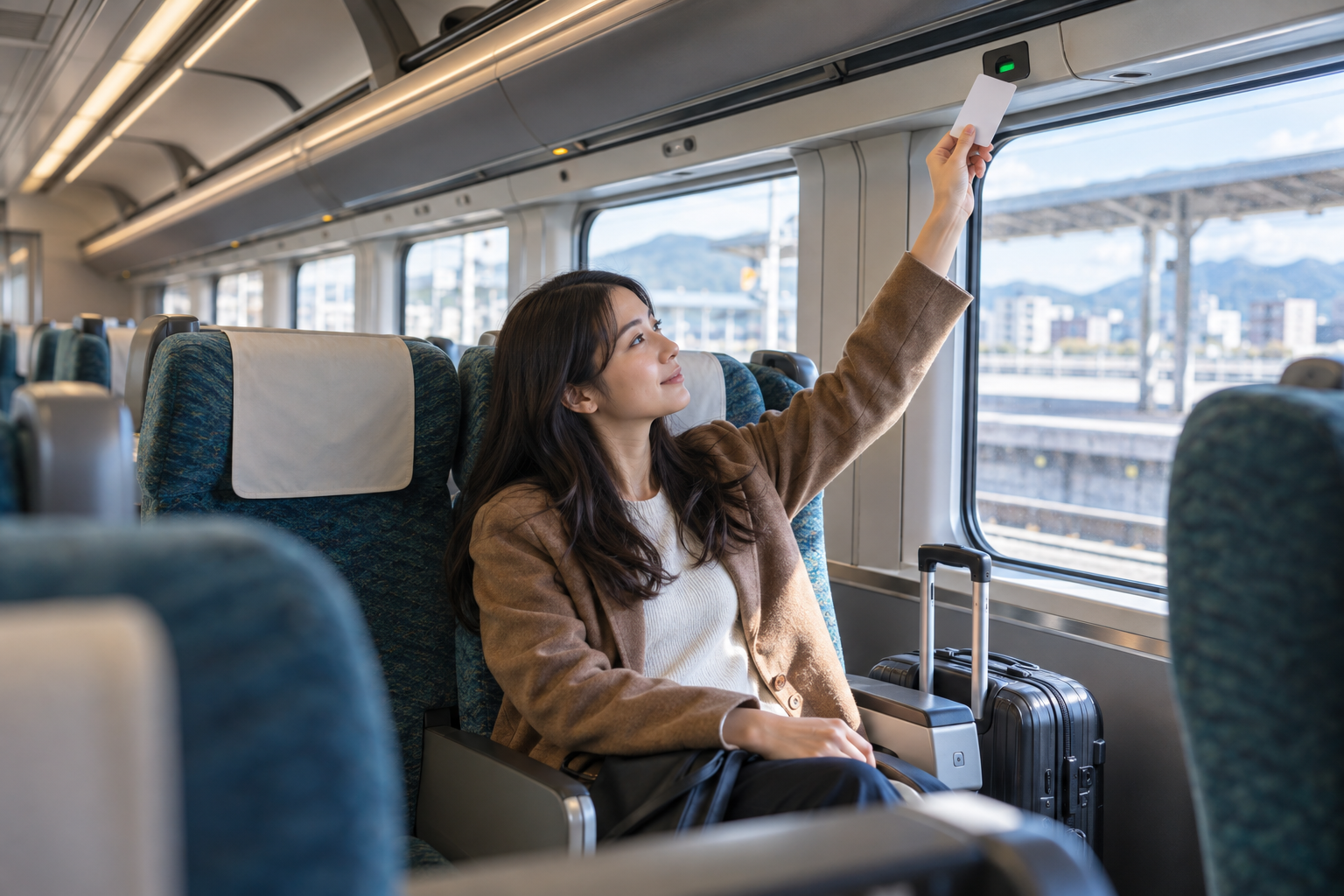
For two paper tickets, stack and insert both together. For a QR or linked IC reservation, use the compatible marked gate.
- 3Check the departure board
Match the train name, number, time, destination, platform, and car number.
- 4Queue at your car marker
Platform markings show exactly where each car and door will stop.
- 5Keep every ticket
Paper tickets that reappear at the gate are still needed at your destination.
5. Luggage rules
On the Tokaido, Sanyo, Kyushu, and Nishi-Kyushu Shinkansen, baggage with total dimensions of more than 160 cm and up to 250 cm requires a seat with an oversized-baggage area. Bags over 250 cm cannot be brought onboard. If you bring qualifying oversized baggage without the required reservation, the railway may charge a ¥1,000 fee and direct you to a storage location.
Where it is designated as an oversized-baggage area, it belongs to passengers who reserved the corresponding seats.
6. Onboard tips
- Keep phone calls in the deck area rather than at your seat.
- Return your seatback before leaving and take all rubbish with you.
- Food and drinks are allowed; station bento boxes are part of the experience.
- Do not assume every train has onboard food sales. Buy what you need at the station.
- Be ready near the door before your stop; station dwell times can be short.
7. Quick FAQ
Can I use Suica by itself on the Shinkansen?
Not as a normal city-train tap. You need a valid Shinkansen fare and reservation method, which may be linked to a registered IC card through an official booking service.
Does the Japan Rail Pass cover Nozomi?
The ordinary pass does not include Nozomi or Mizuho by itself. Pass holders can buy the separate official Nozomi/Mizuho option ticket for eligible journeys.
Can I change a reserved train?
Change conditions depend on how and where you booked. Check the terms before departure and make changes before the scheduled train leaves.
Ticket use was checked against JR Central’s Shinkansen guide. Oversized-baggage rules were checked against the official Japan Rail Pass guide. Confirm your railway’s current conditions before travel.