Tokyo’s rail network looks complicated because several companies operate different lines, but the basic process is always the same: plan your route, find the correct line, enter through the gate, confirm the direction, and follow the exit number at your destination.
1. Before you go
Search the route before entering the station. Note the railway company, line name, departure platform, destination, and any transfers. Tokyo Metro and Toei Subway are separate subway operators, while JR East and private railways operate many of the surface lines.
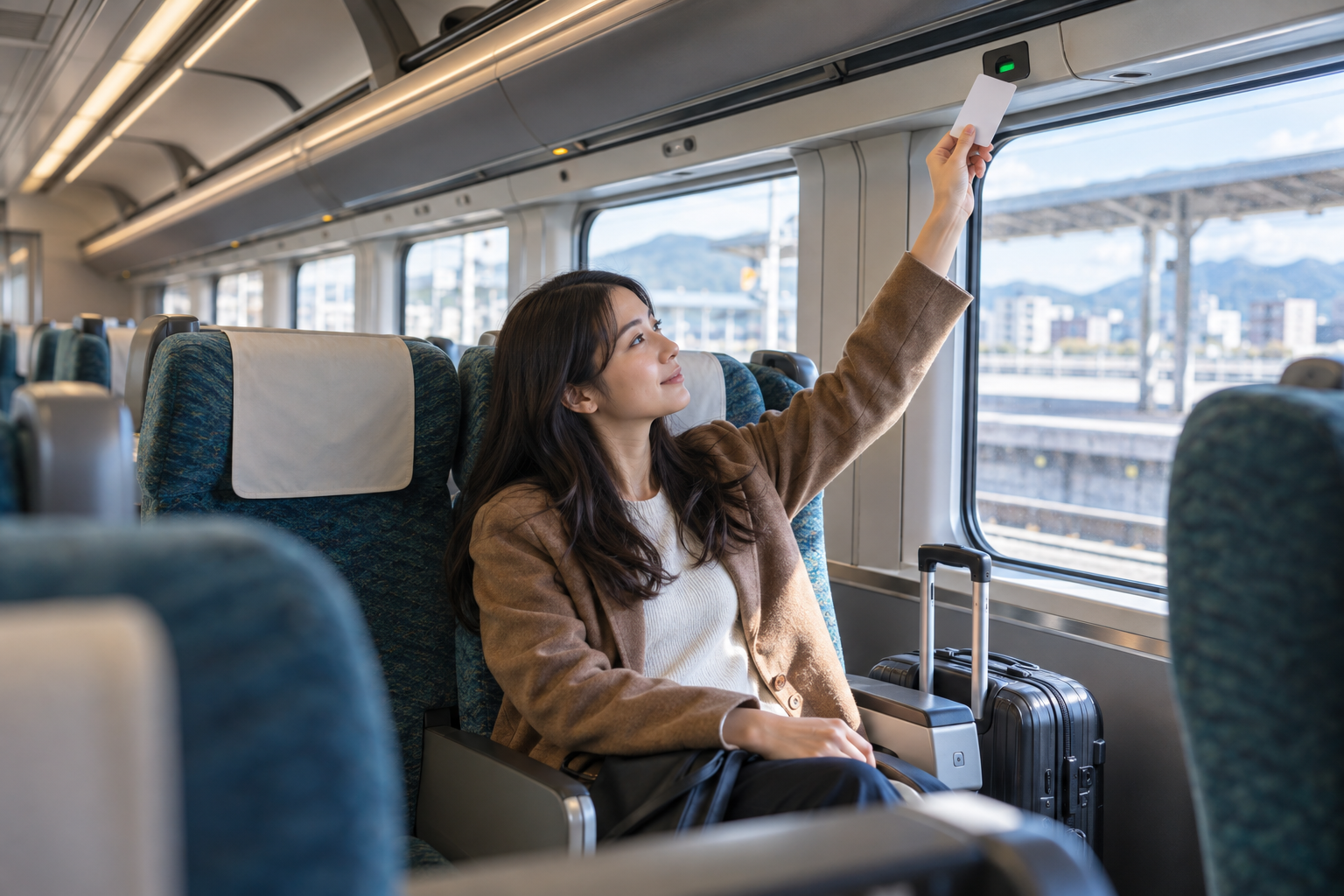
An IC card such as Suica or PASMO is easiest for ordinary city travel because the correct basic fare is deducted when you exit. A paper ticket also works, but you must select the correct fare or destination at the machine.
Save a screenshot of the route before going underground. Mobile reception is usually good, but a screenshot is faster when the platform is crowded.
2. Choose the right route—not only the fastest one
A route app may show several trips that differ by only a few minutes. For a first visit, prefer the route with fewer transfers and a simple walk at the destination. A slightly slower direct train is often less stressful than changing at a huge station.
- Check whether the train is local, rapid, express, or limited express.
- Confirm that your train stops at the destination; faster services may skip it.
- Allow extra time for Shinjuku, Tokyo, Shibuya, Ikebukuro, and other large stations.
- Look at the final destination shown on the platform display, not only the line name.
3. Follow these steps at the station
- 1Find the correct railway entrance
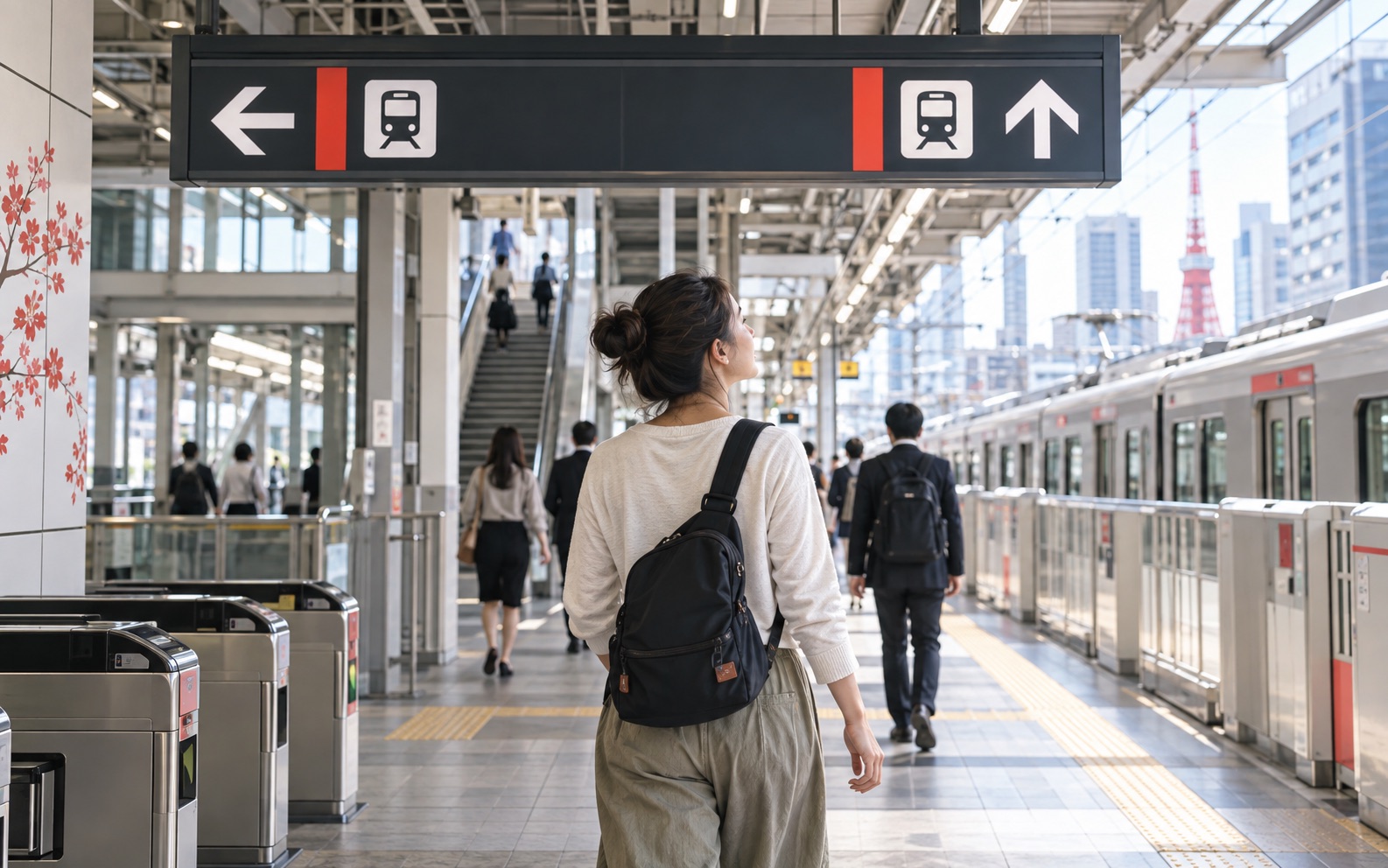
One station name can serve several companies. Look for the operator logo and line color shown in your route.
- 2Follow the line code
Tokyo subway stations use a letter and number, such as G09. This is often easier than remembering the Japanese station name.
- 3Tap or insert your ticket
Tap an IC card on the illuminated reader. If using a paper ticket, insert it and remember to collect it on the other side.
- 4Check the platform direction
Signs show the next stations and major stops in each direction. Confirm at least one station after yours on the route map.
4. Board the correct train
Queue behind the floor markings and let passengers leave before boarding. Check the platform display and the train’s side display. If the service type says rapid or express, confirm that your station appears in the stopping pattern.
Different services may depart from one platform. Always check the train type, destination, and departure time before boarding.
5. Transfers and station exits
For a transfer, follow the signs for the next line. Some transfers stay inside the gates; others require you to exit and enter another operator’s gate. With an IC card, follow the marked transfer route and tap only where instructed.
At your final station, check the exit number before leaving the platform. Large stations may have exits several blocks apart. Google Maps, a hotel confirmation, or the destination website often lists the nearest exit.
6. Common mistakes and easy fixes
- Wrong direction: get off at the next station, cross to the opposite platform, and return.
- Insufficient balance: use a fare-adjustment machine near the exit gate or ask staff.
- IC card gate error: do not keep tapping. Show the card to staff at the staffed gate.
- Missed stop: leave at the next stop and take a train back. Ordinary urban fares adjust automatically.
- Lost inside a station: show staff your destination in writing; major stations usually have English-speaking support or translation tools.
7. Quick FAQ
Do Tokyo trains have English signs?
Yes. Major signs and onboard displays generally include English, and subway station codes make stops easier to identify.
Should I buy a day pass?
Only if your planned trips are mainly on the operator covered by that pass. An IC card is simpler when mixing JR, subway, and private lines.
What time should I avoid?
Weekday commuter peaks are busiest. If possible, travel after the morning rush and avoid carrying large luggage during crowded periods.
Station navigation and boarding steps were checked against Tokyo Metro’s official subway boarding guide. Train patterns and fares can change, so confirm the live platform display before boarding.