The best Tokyo souvenir is specific enough to remind you of the city and practical enough to survive the flight home. Choose by recipient first, then check size, weight, expiry date, materials, and your destination’s customs rules. You do not need the most famous item—food from a neighborhood, a useful craft, or a well-made pen can carry a stronger memory.
1. Quick picks by traveler
| Who it is for | Easy Tokyo souvenir | Why it works |
|---|---|---|
| Office or large group | Individually wrapped sweets or crackers | Easy to divide and label for allergens |
| Cook | Small utensil, seasoning, or kitchen cloth | Useful after the trip; many price levels |
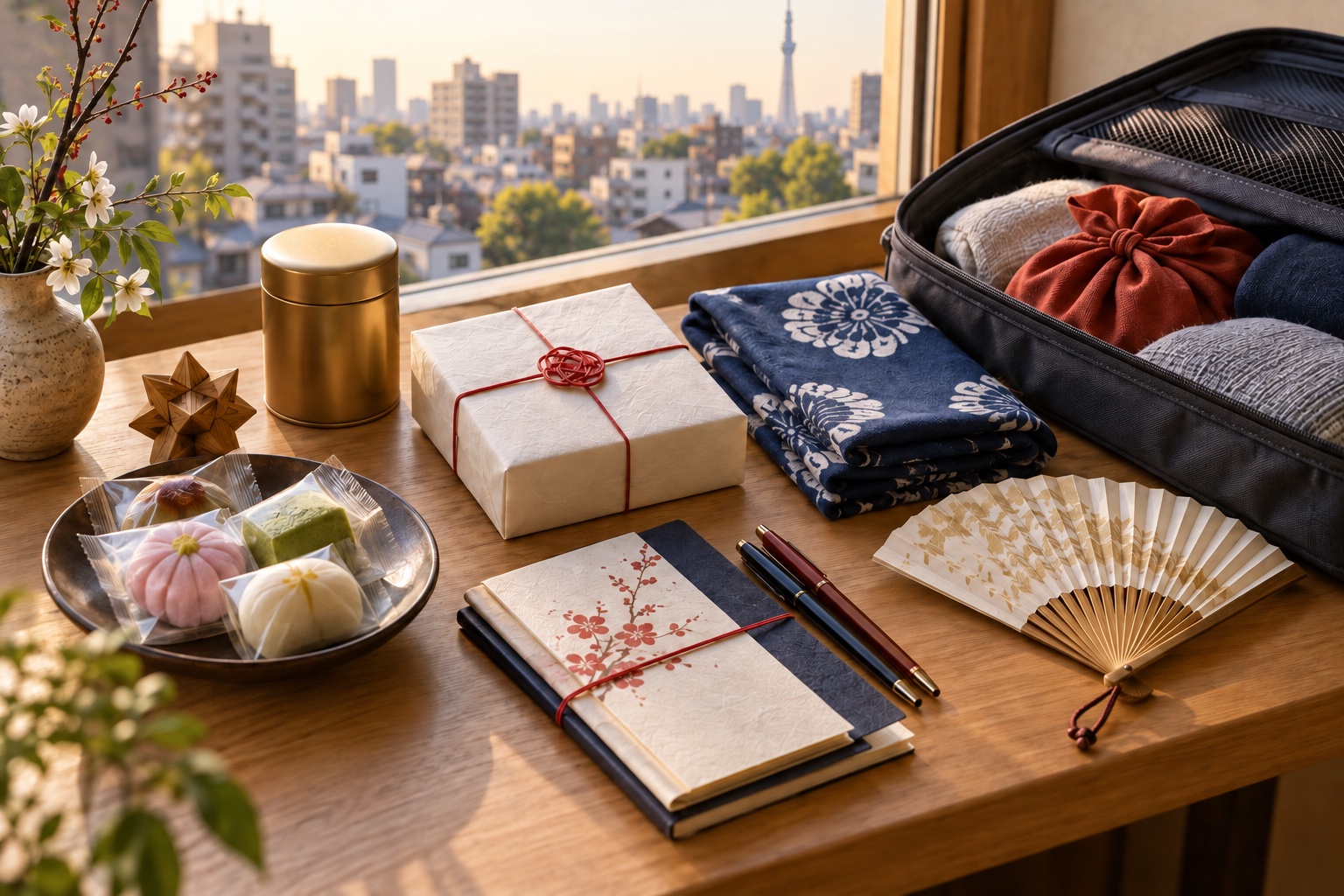
| Stationery fan | Pen, notebook, letter set, or stamp | Light, durable, and easy to test |
| Design lover | Tenugui cloth, hand towel, or small craft | Shows pattern and maker without taking much space |
| Child | Age-appropriate book, toy, or character item | Choose an official product with clear safety labeling |
2. Food gifts that travel well
Tokyo has both long-established local sweets and modern station-exclusive boxes. Ningyo-yaki cakes and kaminari-okoshi rice snacks are associated with traditional areas of the city, while Tokyo Station and department-store basements collect seasonal gifts from many makers.
- Read the expiry date. Some fresh sweets last only a few days.
- Check individual wrapping. It matters when sharing with colleagues or family.
- Look for allergen information. Common ingredients include wheat, egg, milk, soy, nuts, sesame, and alcohol.
- Avoid heat-sensitive food if it will sit in a warm bag or hotel room.
- Check import restrictions for meat, fruit, seeds, dairy, and other regulated foods.
Buy one sample-size pack early in the trip if possible. You can taste it before committing suitcase space to several gift boxes.
3. Traditional crafts and useful objects
A good craft souvenir does not have to be expensive. Tenugui cotton cloths, folding fans, small brushes, chopstick rests, lacquered objects, and Edo-patterned goods are compact options. Higher-priced knives, glassware, ceramics, and artisan brushes deserve more time: ask about the maker, material, care, repair, and safe packing.
Tokyo’s official tourism guide highlights practical craft traditions such as specialist brushes and Edo-style fans. Buying directly from a knowledgeable shop can add context that a generic airport shelf cannot provide.
Pack knives and scissors securely and follow airline, airport, and destination-country rules. Never place them loose in hand luggage.
4. Stationery and everyday goods
Japanese pens, pencils, notebooks, sticky notes, clips, letter sets, and ink stamps are easy to carry. Test only designated samples and check refill availability in your home country. A beautiful pen is less useful if its refill cannot be replaced.
Other practical gifts include hand towels, furoshiki wrapping cloths, coin purses, small trays, tea canisters, and simple kitchen tools. Choose items that make sense without Japanese-only instructions.
5. Where to shop by neighborhood
- Tokyo Station and Marunouchi: efficient for boxed food, station gifts, stationery, and last-day shopping. Check whether a store is inside the ticket gates.
- Asakusa: traditional snacks, cloth, fans, small crafts, and kitchen-related goods. Weekdays are usually easier for browsing than peak weekend hours.
- Nihonbashi and Ginza: department stores, established makers, tableware, stationery, and carefully packaged formal gifts.
- Kappabashi: cookware, utensils, ceramics, and realistic food samples. Compare professional tools rather than buying the first one you see.
- Shibuya and Harajuku: fashion, design goods, character products, music, and youth-culture items.
- Neighborhood shotengai: local food and small everyday products with less tourist-oriented packaging.
6. Packing and customs checks
- 1Keep food in original packaging
Labels help with ingredients, expiry dates, and customs questions.
- 2Protect fragile items
Ask the shop to wrap ceramics or glass and place them between clothing in a firm bag.
- 3Separate liquids and batteries
Follow cabin-liquid limits and airline battery rules.
- 4Keep receipts
They help identify value, maker, model, and tax-free status.
- 5Check destination rules
Your home country—not the Japanese shop—decides what may be imported.
7. Souvenirs to reconsider
Reconsider anything perishable, extremely fragile, too large for your confirmed baggage allowance, made from a restricted animal or plant material, or dependent on Japanese voltage and warranty coverage. Avoid unofficial character goods and products whose origin or price is unclear.
For gifts, also avoid making health claims about cosmetics, supplements, or wellness products. Give the original label and let the recipient decide whether the ingredients are suitable.
8. A simple souvenir plan
- 1List recipients and budget
Separate shared office gifts from individual gifts.
- 2Buy durable items during the trip
Choose crafts and stationery when you encounter a maker or neighborhood you like.
- 3Buy short-dated food near departure
Leave enough time to check expiry dates and pack carefully.
- 4Do one final weight check
Do not solve an overloaded suitcase with another oversized shopping bag.
9. Quick FAQ
Where is the easiest place for last-minute souvenirs?
Tokyo Station is convenient because it combines food, gifts, stationery, and transport connections. Airports are useful but may have less time and a different selection.
Are department-store food halls suitable for gifts?
Yes. They offer careful packaging and many makers, but check expiry dates and storage needs because some items are intended to be eaten quickly.
Can I bring Japanese snacks home?
Many sealed snacks are straightforward, but every destination has its own rules. Check official customs guidance, especially for meat, fruit, seeds, and dairy.
Should I buy tax-free?
Only if you qualify and can follow the export rules. Convenience and return flexibility may matter more than a small saving.
Traditional practical gifts were checked against GO TOKYO’s official Tokyo souvenir guide. Local foods were checked against its Tokyo Local Food guide, and station shopping against the Tokyo Station and Marunouchi guide. Stock, prices, opening hours, and product expiry dates change; confirm at the shop.